
Chloride-based (MgCl₂) board does. Its magnesium oxychloride binder is hygroscopic: above roughly 80–84% relative humidity it absorbs moisture from the air and forms concentrated chloride droplets on the surface — the “weeping” effect. Those droplets run onto galvanised fasteners, steel framing and flashings and can corrode them within a few years; the chloride leachate also damages adjacent timber and can support mould.
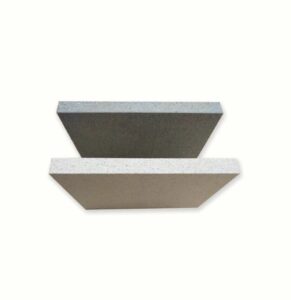
Sulfate-based (MgSO₄) board avoids this mechanism. It carries about 1% dissolvable chloride against roughly 5% in typical chloride board, absorbs about 37% less moisture at 95% RH, and does not weep onto fixings. Sulfate boards are therefore the correct choice for humid, coastal and exterior applications, while chloride boards are best limited to dry interior work.
Regardless of binder, specify stainless or coated fasteners and seal cut edges. Ask suppliers for their dissolvable chloride figure — the “MgO” label alone does not tell you which binder you are getting.
NOV
2026