2-sided TG 2700x600x16mm fiber cement decking board

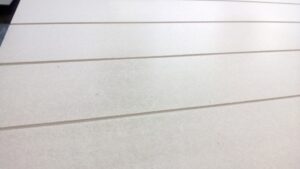
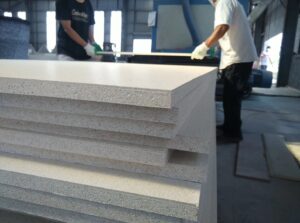
For a 2-sided Tongue and Groove (TG) fiber cement decking board with dimensions of 2700mm x 600mm x 16mm, you are looking at a high-density, structural-grade panel typically used as a subfloor or finished floor base in modular construction or mezzanine applications.

Technical Specifications & Characteristics

Feature Description
Material Cellulose fiber-reinforced cement (Autoclaved)
Density Generally ≥1.3g/cm3 for structural flooring
Fire Rating Typically A1 or A2-s1, d0 ...
Continue Reading →
0

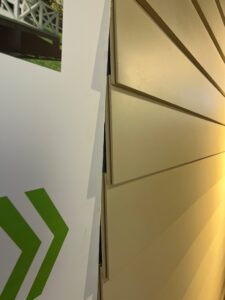
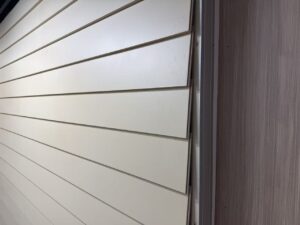
12mm ship lap edge groove boards Mgo panels

For 12mm MgO Shiplap panels, the focus shifts from structural flooring to decorative and functional wall cladding (facades). Shiplap is highly valued in international markets like the US, Canada, and Australia for its superior water-shedding capabilities and “seamless” aesthetic.

The 12mm thickness is specifically optimized for vertical applications where weight and ease of installation are as important as fire resistance.

Key Technical Specifications (12mm)

Feature Target ...
Continue Reading →
0

Tongue & Groove Fire-Resistant Mgo board Flooring

For heavy-duty flooring applications, Tongue & Groove (T&G) MgO boards are often the gold standard due to their structural integrity and superior fire resistance compared to traditional plywood or OSB.

Here is a breakdown of the technical specifications, benefits, and installation considerations for T&G MgO flooring:

  1. Key Technical Advantages
  • Fire Rating: Most high-quality MgO boards are classified as non-combustible (Class A1/UL 050). They do not contribute to flame spread and maintain structural stability under high heat.
  • Dimensional Stability: Unlike wood-based subfloors, MgO ...
Continue Reading →
0

What is the slip resistance rating of fiber cement decking board?

Slip resistance for fiber cement decking is typically measured using two primary standards: the Pendulum Test Value (PTV) and the R-Rating (Oil-Wet Ramp Test). Because fiber cement is a manufactured product, the rating often depends on whether the board is smooth, textured (wood grain), or has a factory-applied anti-slip coating.

Common Slip Resistance Ratings

For most commercial and residential fiber cement decking products, you will find the following average ratings:

Condition Pendulum Test Value (PTV) R-Rating (DIN 51130)
Dry 60+ (Low Slip Potential) R11 – R12
Wet 36 – 45 ...
Continue Reading →
0

Tongue and groove fiber cement board Flooring and Underlayment

When using Tongue and Groove (T&G) Fiber Cement Board for flooring and underlayment, the focus shifts from aesthetics to structural integrity and moisture management.

In technical specifications, this material is often categorized as Structural Subflooring or Tile Underlayment.

Primary Flooring Applications

  • Internal Wet Area Flooring: This is the standard for bathrooms, laundries, and kitchens. The T&G edges ensure the floor doesn’t “bounce” or deflect at the joints, which prevents floor tiles from cracking.
  • External Decking Substrate: Used as a base for tiled balconies or ...
Continue Reading →
0

Is Tongue and Groove Subfloor fiber cement board ‘Self-Supporting’ or does it require a structural sub-base

Yes, our Tongue & Groove (T&G) fiber cement boards are engineered as structural, self-supporting subfloor panels. They are designed to be fixed directly to timber or steel floor joists without the need for a secondary structural sub-base (such as plywood or OSB).

However, to ensure structural integrity and meet international building codes, the following parameters must be ...

Continue Reading →
0

Does Fibre Cement Flooring Board Tongue & Groove swell or rot when exposed to moisture?

One of the primary reasons builders choose fibre cement over timber or plywood is its performance in wet environments. Here is the technical breakdown of how it handles moisture:

  1. Resistance to Rot

Fibre cement is composed of Portland cement, sand, and cellulose fibers. Because it is a cementitious product, it contains no organic material that can serve as a food source ...

Continue Reading →
0

What is the advantage of fiber cement decking board compared to WPC?

While WPC (Wood Plastic Composite) is a popular choice for residential backyards, fiber cement decking is increasingly preferred for high-end commercial projects and regions with extreme weather.

The advantages of fiber cement over WPC generally fall into three “Industrial Grade” categories: Safety, Stability, and Thermal Performance.

  1. Fire Safety (The “Dealbreaker” Advantage)

This is the most significant differentiator in international building codes.

  • Fiber Cement: Naturally non-combustible (typically rated Class A / A1). It does not contribute fuel to a fire and does not emit ...
Continue Reading →
0

How does fiber cement decking board handle extreme UV exposure?

Fiber cement decking is highly regarded in the international market specifically for its performance in high-UV environments like Australia, the Middle East, and the Southern United States. Unlike Wood Plastic Composites (WPC) or natural timber, fiber cement is an inorganic mineral-based product, which gives it a distinct advantage in sunlight.

Standard decking materials like WPC often contain ...

Continue Reading →
0

What is the water absorption rate of Mgo board after 24 hours of immersion?

The water absorption rate of a high-quality Magnesium Oxide (MgO) board after 24 hours of total immersion typically ranges between 8% and 15% by weight.

However, this value can fluctuate based on the board’s density and its chemical formulation (Chloride-based vs. Sulfate-based).

  1. Performance by Board Density

MgO boards are categorized by their density, which directly correlates with their porosity and water resistance:

  • Standard Density (800–900kg/m3): Absorption is usually on the higher end, around 12%–18%. These are often used for internal wall linings.
  • High Density ...
Continue Reading →
0
Page 1 of 63 12345...»