How does fiber cement decking board handle extreme UV exposure?

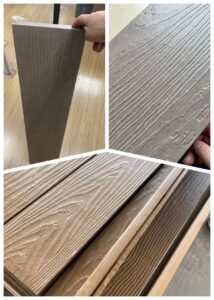
Fiber cement decking is highly regarded in the international market specifically for its performance in high-UV environments like Australia, the Middle East, and the Southern United States. Unlike Wood Plastic Composites (WPC) or natural timber, fiber cement is an inorganic mineral-based product, which gives it a distinct advantage in sunlight.

Standard decking materials like WPC often contain polyethylenes ...

Continue Reading →
0

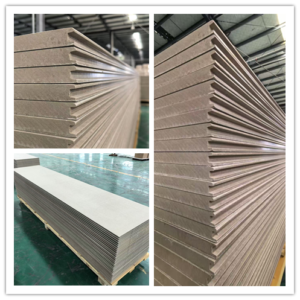
What is the water absorption rate of Mgo board after 24 hours of immersion?

The water absorption rate of a high-quality Magnesium Oxide (MgO) board after 24 hours of total immersion typically ranges between 8% and 15% by weight.

However, this value can fluctuate based on the board’s density and its chemical formulation (Chloride-based vs. Sulfate-based).

  1. Performance by Board Density

MgO boards are categorized by their density, which directly correlates with their porosity and water resistance:

  • Standard Density (800–900kg/m3): Absorption is usually on the higher end, around 12%–18%. These are often used for internal wall linings.
  • High Density ...
Continue Reading →
0

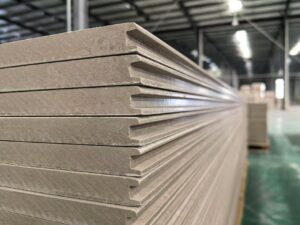
Key Technical Advantages of Mgo sulfate board

What is Magnesium Sulfate (MgSO4) Board?

Unlike the older generation of Magnesium Oxide (MgO) boards which used Magnesium Chloride (MgCl2) as a binding agent, the Sulfate version utilizes Magnesium Sulfate (MgSO4). This chemical shift was engineered to solve the “crying” or “sweating” phenomenon—where chloride-based boards absorb environmental moisture and leach corrosive salt water.

The Significance of the A1 Fire Rating

The A1 Rating is the highest classification under the European Standard EN 13501-1. It signifies that the material is non-combustible and provides:

  • No contribution ...
Continue Reading →
0

How to prevent the weep or sweat in high humidity about Mgo board?

To solve this problem, the industry developed Magnesium Sulfate (MgSO4) boards, often marketed as “Chloride-Free” or “Sulfate-based” MgO boards.

Feature Chloride-based (Standard) Sulfate-based (Premium)
Humidity Resistance Prone to weeping in humid climates. Stable; does not weep or sweat.
Corrosion Risk High (corrodes steel/screws). Very Low (safe for metal contact).
Price Generally cheaper. More expensive due to raw material costs.
Best Use Dry, interior controlled climates. Exterior cladding, wet areas, and humid regions.
Continue Reading →
0

How does the fiber cement exterior cladding perform in high-moisture or coastal environments?

Fiber cement cladding is widely regarded as one of the most resilient cladding materials for high-moisture and coastal environments. Unlike wood, which rots, or vinyl, which can become brittle, fiber cement’s inorganic composition allows it to withstand constant exposure to salt air and humidity.

Here is a detailed breakdown of how it performs under these specific conditions:

  1. Resistance to Rot and Corrosion

In coastal areas, the combination of high humidity and salt spray creates an aggressively corrosive atmosphere.

  • Non-Organic Base: Because fiber ...
Continue Reading →
0

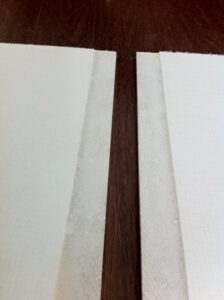
Can tongue and groove fiber cement board be used for exterior wall cladding?

Tongue and groove (T&G) fiber cement board is an excellent choice for exterior wall cladding and is frequently used in both residential and commercial construction.

While standard square-edge fiber cement boards are common, the T&G profile offers specific structural and aesthetic advantages for building envelopes.

  1. Key Benefits for Exterior Use
  • Seamless Aesthetics: The T&G interlocking system allows for a flush surface with tight joints. This is ideal for modern “shiplap” looks or smooth, continuous wall surfaces where visible gaps are unwanted.
  • Enhanced Weather ...
Continue Reading →
0

Tongue and groove fiber cement board is both waterproof and fire resistant?

Fiber cement board is a highly durable building material, and when manufactured with a tongue and groove (T&G) profile, it is specifically designed for seamless installation in flooring, subflooring, and wall cladding.

  1. Water Resistance vs. Waterproofing

Fiber cement is composed of Portland cement, sand, and cellulose fibers. While it will not rot, warp, or settle when exposed ...

Continue Reading →
0

What are the advantages of tongue and groove fiber cement board for interior wall cladding?


There are main advantages of tongue and groove fiber cement board for interior wall cladding:

  1. Fast & easy installation

The tongue and groove interlocking design fits tightly, saves labor and construction time.

  1. Moisture resistant & mold proof

Suitable for bathrooms, kitchens, basements and humid indoor areas.

  1. Fire resistant & safe

Class A non‑combustible, asbestos‑free, healthy for indoor living spaces.

  1. Durable & stable

No shrinking, no swelling, ...

Continue Reading →
0

fiber cement tunnel board

Tunnel environments are uniquely harsh, characterized by constant moisture, piston-effect air pressure from passing vehicles, and the necessity for high fire resistance.

Key Technical Requirements

  1. Fire Performance & Passive Protection

In a tunnel, a fire can reach extreme temperatures very quickly (the RWS curve or HCinc curve). Tunnel boards must be Class A1 Non-combustible.

  • Thermal Insulation: The board must protect the structural concrete or steel lining from “spalling” (where moisture in concrete expands and causes the surface to explode).
  • Toxic Fumes: They must be ...
Continue Reading →
0

fiber cement board is Not release toxic gases during a fire.

One of the primary safety advantages of fiber cement board is its behavior under extreme heat. Because it is composed of inorganic materials—primarily Portland cement, sand, and cellulose fibers—it is naturally non-combustible.

Here is a breakdown of why fiber cement is considered a safe choice for fire-rated assemblies:

Fire Performance Characteristics

  • No Toxic Off-gassing: Unlike wood-based panels (which release carbon monoxide and smoke) or certain plastic-based composites and EPS-core panels (which can release toxic fumes like hydrogen cyanide or thick black smoke), fiber ...
Continue Reading →
0
Page 2 of 64 12345...»