
This is a common concern for contractors because job sites are rarely perfectly dry. The good news is that MgO Sulfate Board is highly water-resistant, but its behavior during the construction phase is different from both wood and fiber cement.
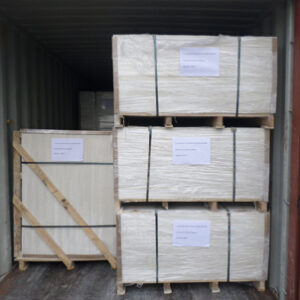
Here is exactly what happens if the board gets wet before the building is dried-in:
- No Structural Loss (It won’t “mush”)
Unlike gypsum board (drywall), which turns to “mush” or loses its strength when wet, MgO Sulfate board is an inorganic mineral cement.
- The Bond: The chemical bond (5-1-7 crystalline phase) does not dissolve in water.
- Integrity: Even if the board is fully submerged in water for 24 hours, it will retain the vast majority of its structural strength once it dries out. It will not delaminate or rot.
- Resistance to Warping
MgO Sulfate boards are much more dimensionally stable than wood-based products (like OSB or Plywood).
- Low Expansion: The “Thickness Swelling” rate is typically less than 0.1% to 0.5%. This means the board is unlikely to buckle or “tent” at the joints just because it got rained on.
- Recovery: If a board does experience slight temporary bowing due to uneven moisture (e.g., water on one side only), it typically returns to its original flat state as it dries out, provided it was installed/fixed correctly to the studs.
- The “Alkaline” Protection
Because the board is naturally alkaline (high pH), it inhibits the growth of mold and mildew even if it stays damp for several days during a rainy construction period. This is a massive advantage over OSB or plywood, which can begin to grow mold within 48 hours of getting wet.
DEC
2025