
Fiber cement board is a highly durable building material, and when manufactured with a tongue and groove (T&G) profile, it is specifically designed for seamless installation in flooring, subflooring, and wall cladding.
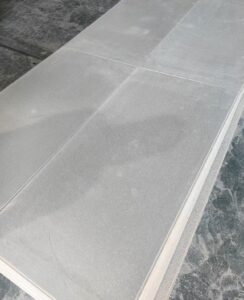
- Water Resistance vs. Waterproofing
Fiber cement is composed of Portland cement, sand, and cellulose fibers. While it will not rot, warp, or settle when exposed to moisture, it is technically porous.
- Dimensional Stability: Unlike plywood or OSB, fiber cement will not swell or lose structural integrity if it gets wet.
- The T&G Benefit: The tongue and groove joint helps create a tighter seal against moisture penetration between panels, but for a truly “waterproof” assembly (like a bathroom floor or an exterior deck), a waterproof membrane or sealant is still required over the board.
- Freeze-Thaw Durability: High-quality fiber cement boards are designed to withstand cycles of freezing and thawing without cracking, making them ideal for exterior use
- Fire Resistance and Safety
Fiber cement is widely recognized as one of the safest materials regarding fire performance.
- Non-Combustible: Most fiber cement boards carry a Class A (or Class 1) fire rating. This means the material will not ignite or contribute fuel to a fire.
- Fire-Rated Assemblies: When used in specific wall or floor assemblies, fiber cement can help achieve 1-hour or 2-hour fire ratings, which is critical for meeting building codes in multi-family or commercial structures.
- Heat Tolerance: It can withstand high temperatures without releasing toxic smoke, a significant advantage over PVC or wood-based products.
- Key Technical Comparison
| Feature | Fiber Cement Performance |
| Fire Rating | Class A (Non-combustible) |
| Moisture Impact | Won’t rot or decay; highly resistant |
| Termite/Pest | Immune to wood-boring insects |
| Installation | T&G allows for flush joints and reduced fastener use |
24
MAR
2026
MAR
2026
0