
A high-quality MgO Sulfate Board (Magnesium Sulfate(MgSO4) typically does not sweat or weep, even in high-humidity environments.
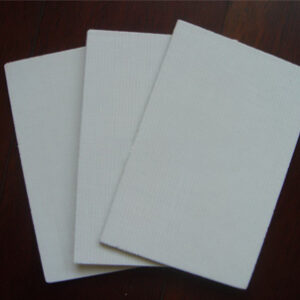
This is the primary reason the “Sulfate” version was developed.1 The “sweating” phenomenon is almost exclusively a failure of the older Magnesium Chloride (MgCl2) boards
Why Chloride Boards “Sweat” (The Failure)
Traditional MgO boards use Magnesium Chloride as a binder. This salt is hygroscopic, meaning it naturally attracts water from the air.
- The Weeping Point: When relative humidity (RH) stays above 84% for a prolonged period, the chloride salts in the board absorb so much moisture that they turn into a liquid brine.
- The Result: Salty, yellowish droplets (the “tears”) form on the surface. This liquid is highly corrosive and will quickly rust metal studs and screws.
Why Sulfate Boards are Safe
Sulfate-based MgO boards replace the chloride with Magnesium Sulfate.
- Non-Hygroscopic: Magnesium sulfate does not have the same aggressive attraction to atmospheric moisture.
- Stable Crystal Phase: The chemical bond formed in sulfate boards (often called the 5-1-7 phase) is much more stable in damp conditions.
- Performance: In tests at 95% humidity, sulfate boards absorb significantly less moisture than chloride boards and do not reach the “deliquescence” point where liquid starts to leach out.
Key Takeaways for High-Humidity Projects
If you are building in a coastal area, a bathroom, or a basement, the differences are critical:
| Feature | MgO Chloride Board | MgO Sulfate Board |
| High Humidity (>85% RH) | Will Sweat (Weep) | Remains Dry |
| Corrosion Risk | High (corrodes fasteners) | None |
| Dimensional Stability | Poor (swells/warps) | Excellent |
| Cost | Cheaper | More expensive |
23
DEC
2025
DEC
2025
0