
Non-combustible fiber cement facade materials are high-density architectural exterior cladding panels composed of Portland cement, silica sand, natural cellulose fibers, and inorganic mineral pigments. Engineered specifically to eliminate fire propagation risks on building envelopes, these panels achieve top-tier international fire safety ratings—such as EN 13501-1 Class A1 or A2-s1, d0 and ASTM E136—without sacrificing aesthetic versatility, impact resistance, or long-term weather durability.
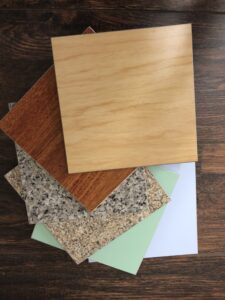
Key Technical Specifications & Fire Safety Standards
| Performance Property | Standard Rating & Industry Benchmark |
| Material Composition | High-density autoclaved fiber cement (100% asbestos-free) |
| European Fire Classification | EN 13501-1 Class A1 / Class A2-s1, d0 (Non-combustible) |
| North American Fire Standard | ASTM E136 (Non-combustible) / NFPA 285 compliant systems |
| Smoke & Droplet Emission | s1 (Minimal/no smoke) and d0 (Zero flaming droplets) |
| Standard Panel Thickness | 8 mm, 10 mm, 12 mm (varies by structural wind-load design) |
| Standard Dimensions | 2500 x 1220 mm / 3050 x 1220 mm |
| Areal Density (Weight) | ~14.5 – 16.5 kg/m² (depending on thickness and profile) |
| Weather & Freeze-Thaw Durability | EN 12467 Category A (100+ freeze-thaw cycles, UV-stable) |
| Moisture & Biological Resistance | Hydrophobic surface, resistant to mold, fungi, and termites |
12
NOV
2026
NOV
2026
0