
One of the primary reasons builders choose fibre cement over timber or plywood is its performance in wet environments. Here is the technical breakdown of how it handles moisture:
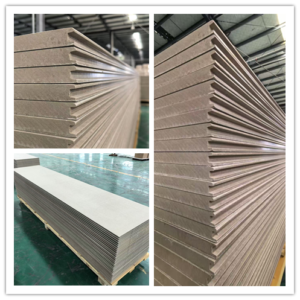
- Resistance to Rot
Fibre cement is composed of Portland cement, sand, and cellulose fibers. Because it is a cementitious product, it contains no organic material that can serve as a food source for fungi or termites. Unlike wood-based products, it will not decay or rot, even if it remains damp for extended periods.
- Dimensional Stability (Swelling)
While all materials have some degree of thermal or moisture movement, fibre cement is considered dimensionally stable.
- Minimal Expansion: Unlike OSB or plywood, which can swell significantly at the edges and “mushroom,” fibre cement’s expansion rate is negligible.
- T&G Integrity: For Tongue & Groove (T&G) boards, this stability is crucial. It ensures that the joints remain tight and flush, preventing the floor from buckling or the T&G edges from snapping under pressure due to swelling.
- Strength When Wet
Most wood-based flooring loses structural integrity when saturated. Fibre cement retains the vast majority of its strength even when wet, making it an ideal substrate for:
- Wet Areas: Bathrooms, laundries, and kitchens.
- Construction Delays: If the building is “open to the weather” before the roof is finished, these boards will not be ruined by rain.
Important Note on Installation
Even though the board itself won’t rot or swell, moisture management is still important for the overall floor system:
- Joint Sealing: In wet areas, a polyurethane sealant is typically applied to the Tongue & Groove joint during installation to create a water-resistant seal.
- Framing: Ensure the timber or steel joists underneath are also protected, as the boards are only one part of the assembly.
APR
2026