
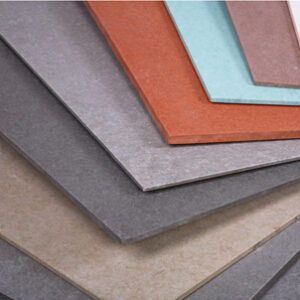
Through-colored, sanding-textured fiber cement is a high-performance facade material where the pigment is integrated throughout the entire panel. Unlike surface-painted boards, the color is consistent from the face to the core, and the surface is mechanically sanded to create a raw, tactile aesthetic.
Key Characteristics
- Through-Colored: The color pigments are mixed into the “slurry” before the board is pressed. This means that if the panel is scratched or cut, the color remains identical at the core.
- Sanded Surface: The panels undergo a factory sanding process that leaves fine, directional sanding lines. This reveals the natural, raw texture of the fiber cement matrix.
- Natural Variation: Because it is a mineral-based product, you will see subtle “lively” nuances in hue and tone between panels, which architects often use to give a building a dynamic, non-uniform look.
- Technical Benefits
| Feature | Benefit |
| Durability | High-density material resistant to impact, rot, and insects. |
| Colorfastness | UV-resistant pigments mean the facade won’t “peel” or “chip” like paint. |
| Fire Safety | Typically rated A2-s1, d0 (non-combustible). |
| Low Maintenance | No repainting required; it develops a natural patina over time. |
| Edge Aesthetics | Edges do not need to be painted or hidden after cutting, as they match the face. |
26
JAN
2026
JAN
2026
0