Author Archive

Are the fiber cement planks “factory-sealed” on all six sides, including inside the tongue and groove

Whether fiber cement T&G planks are “factory-sealed on all six sides” depends entirely on the specific product line and manufacturer. This is a critical distinction because it determines the board’s lifespan and the amount of work required on-site.

  1. The Three Common Sealing Levels

In the industry, you will typically find three levels of factory treatment:

  • Unsealed (Raw): These are light gray and have no coating. You must prime and paint all six sides yourself before installation. This is becoming rare for ...
Continue Reading →
0

Will the Mgo board board warp or lose structural integrity if it gets wet during the construction phase?

This is a common concern for contractors because job sites are rarely perfectly dry. The good news is that MgO Sulfate Board is highly water-resistant, but its behavior during the construction phase is different from both wood and fiber cement.

Here is exactly what happens if the board gets wet before the building is dried-in:

  1. No Structural Loss (It won’t “mush”)

Unlike ...

Continue Reading →
0

Does the mgo sulfate board contain any hazardous materials like asbestos or crystalline silica?

One of the strongest selling points of MgO Sulfate Board in the international market—especially in regions like Australia, the US, and Europe—is its safety profile compared to traditional materials.

The short answer is: High-quality MgO Sulfate boards do not contain asbestos, and they typically contain zero or trace amounts of crystalline silica.

Here is the detailed breakdown:

  1. Asbestos-Free
  • The Reality: Asbestos ...
Continue Reading →
0

Will Mgo sulfate board react with salt air in coastal environments?

The short answer is no. In fact, MgO Sulfate Board is considered one of the best high-performance building materials for coastal environments.


Unlike its predecessor (Magnesium Chloride board), the Sulfate version is chemically engineered to remain stable and non-reactive even when exposed to salt-laden, humid air.

Here is a detailed breakdown of why it performs so well in coastal areas:

  1. It ...
Continue Reading →
0

Can I apply tiles, wallpaper, or paint directly onto the Mgo board surface?

you can apply tiles, wallpaper, and paint directly onto MgO sulfate boards, but because the board is mineral-based and alkaline, there are specific “best practices” you must follow to ensure the finish doesn’t peel or crack.

  1. Painting MgO Sulfate Board

Painting is the most common finish. The key is managing the board’s alkalinity and dust.

  • Primer is Mandatory: You must use ...
Continue Reading →
0

Does the Mgo sulfate board “sweat” or “weep” in high-humidity environments?

A high-quality MgO Sulfate Board (Magnesium Sulfate(MgSO4) typically does not sweat or weep, even in high-humidity environments.

This is the primary reason the “Sulfate” version was developed.1 The “sweating” phenomenon is almost exclusively a failure of the older Magnesium Chloride (MgCl2) boards

Why Chloride Boards “Sweat” (The Failure)

Traditional MgO boards use Magnesium Chloride as a binder. This salt is hygroscopic, ...

Continue Reading →
0

Mgo SIP PANELS VS OSB SIPS

The choice between MGO SIP Panels (Magnesium Oxide Structural Insulated Panels) and OSB SIP Panels (Oriented Strand Board Structural Insulated Panels) hinges primarily on performance requirements, particularly regarding fire and moisture. Both are high-performance building systems, but MGO offers superior non-combustibility and water resistance

Comparison Summary

MGO SIPs use Magnesium Oxide board as the exterior sheathing, which is a naturally non-combustible, mineral-based material. OSB SIPs use Oriented Strand Board (a wood composite) which is combustible.

Continue Reading →

1

MGO Flexible Sheathing Sheet

The concept of “MGO Flexible Sheathing Sheet” refers to the thinner, lower-density versions of Magnesium Oxide (MGO) board that exhibit a surprising degree of flexibility compared to traditional, rigid building materials like thicker cement board or plywood.

While MGO board is an inherently cementitious and durable material, manufacturers engineer specific products to be flexible enough for certain applications.

Key Characteristics of

Continue Reading →
0

MgO Non-Combustible Structural Floor Panels

MGO structural floor panels are engineered to be a superior, single-layer replacement for traditional plywood/OSB subflooring, often eliminating the need for a secondary poured gypsum underlayment for fire rating.

Key Features of MGO Structural Floor Panels

These panels are designed specifically to carry loads and meet stringent building codes for floor/ceiling assemblies.

  1. Non-Combustibility and Fire Rating
  • ASTM E136 Non-Combustible: MGO is inherently non-combustible. It ...
Continue Reading →
0

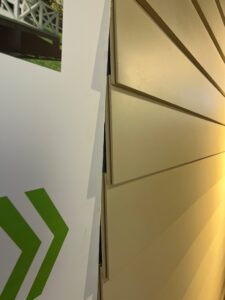
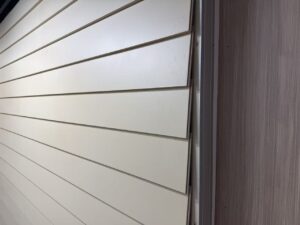
Magnesium Oxide (MGO) Board Tongue & Groove (T&G) Exterior Horizontal Siding.

That is a very specific product configuration: Magnesium Oxide (MGO) Board Tongue & Groove (T&G) Exterior Horizontal Siding.

This product combines the core benefits of MGO board with a popular siding installation profile.

Product Description and Purpose

  1. The Core Material: MGO Board

MGO board is a mineral-based cementitious building material composed mainly of Magnesium Oxide (MgO) and Magnesium Sulfate ($\text{MgSO}_4$).

  • Key Benefits:
    • Non-Combustible (Class A/A1 ...
Continue Reading →
0
Page 1 of 47 12345...»